CRAFTED FROM NATURE: Designing Our RHS Sandringham Garden
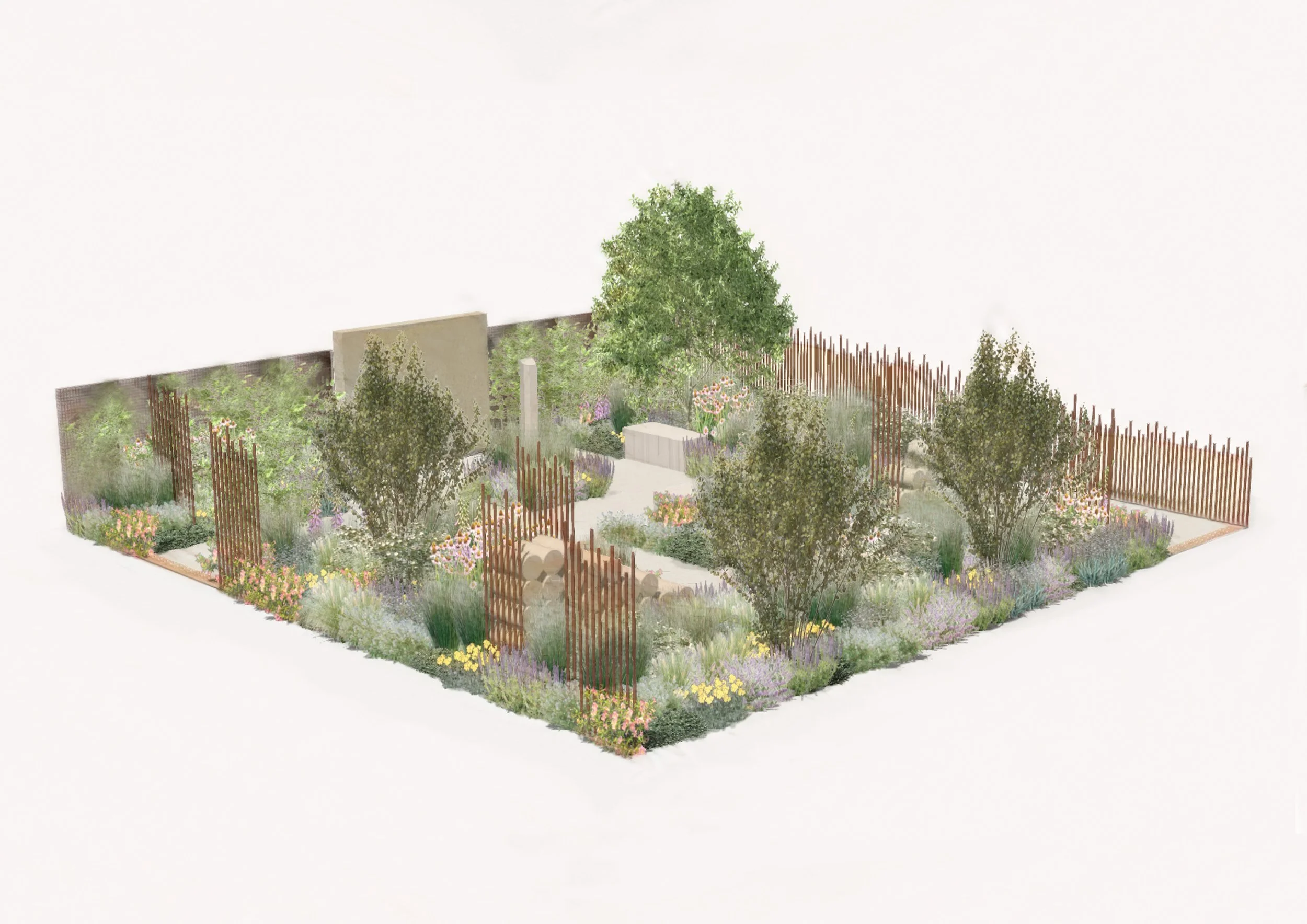
Designing the RHS Crafted from Nature Feature Garden at Sandringham gave us an opportunity to explore how we could take inspiration from the county we live and work in and translate it into a contemporary garden.
Our thinking started with reed. It was a material we had wanted to explore for some time, both for its qualities as a natural building material and for its strong connection to the Norfolk landscape. The reed used in the garden was harvested on Haddiscoe Island using traditional methods, connecting the material directly to the landscape and the craft we were interested in exploring.
We wanted to understand how a material with such a strong local identity, and the traditional craft of thatching, could be brought into a contemporary garden setting.
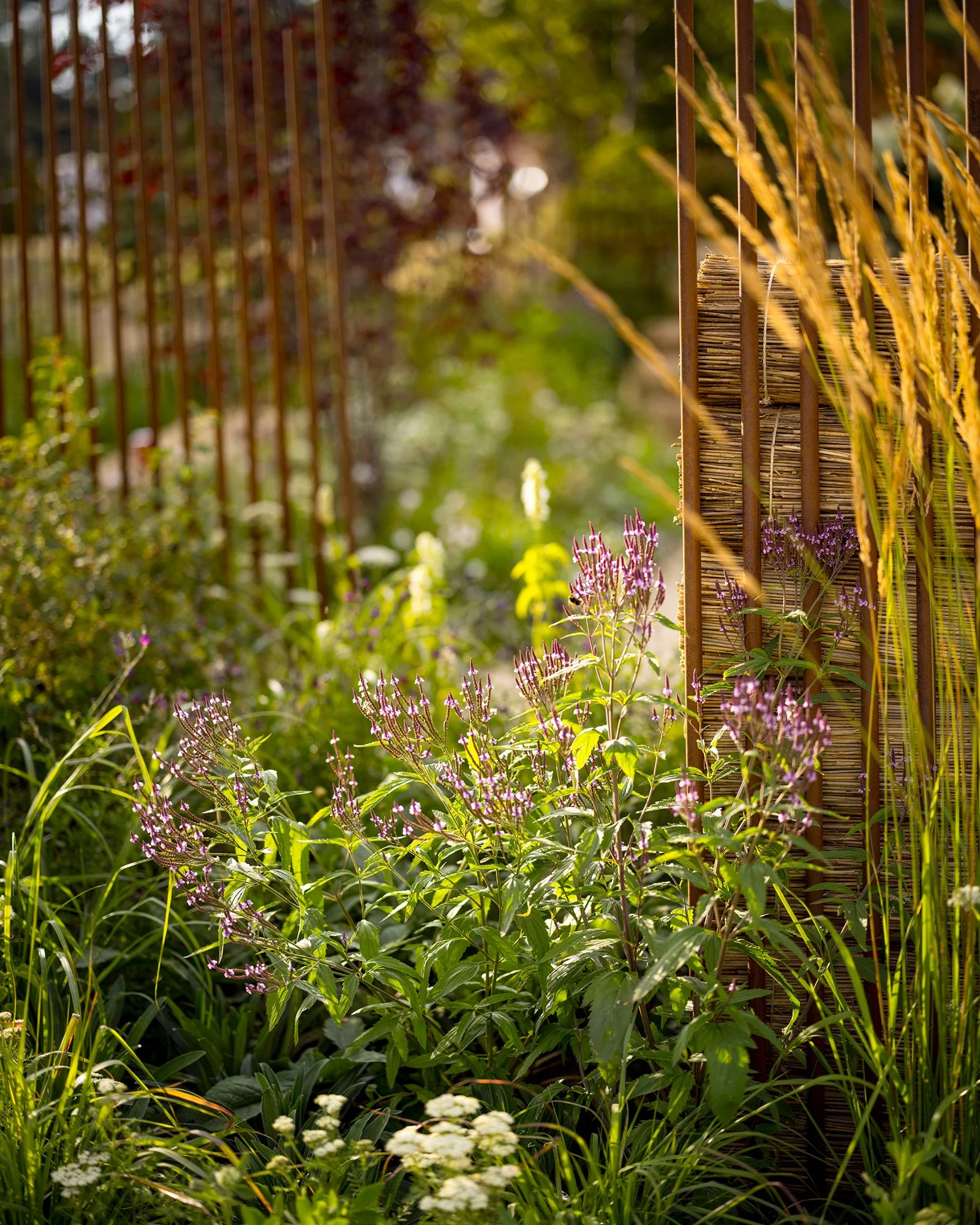
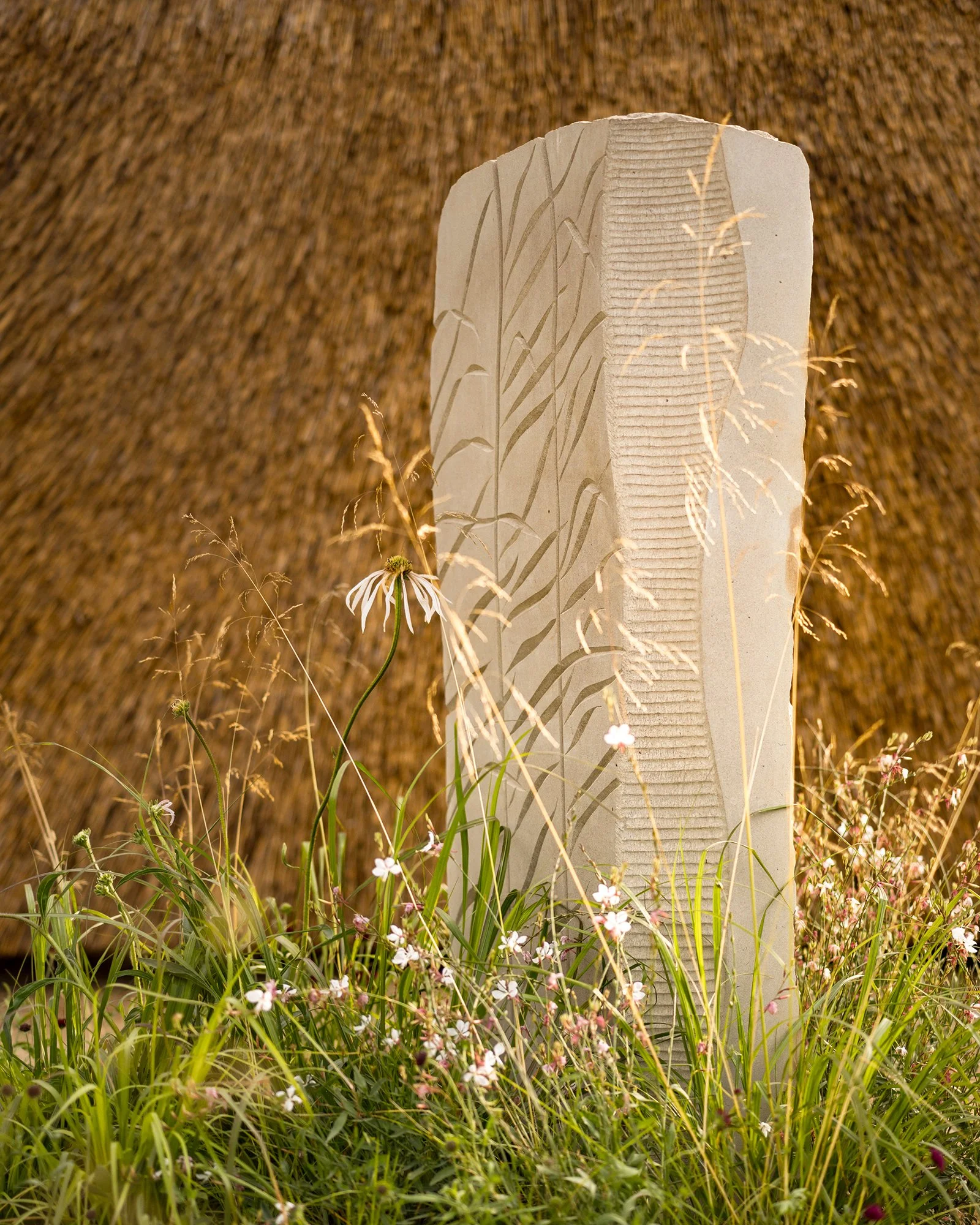
This became a key feature of the garden: a thatched reed wall, created by local master thatcher Nick Walker. Rather than simply using reed as a reference to Norfolk, we wanted the material and the way it was made to have a genuine role within the garden.
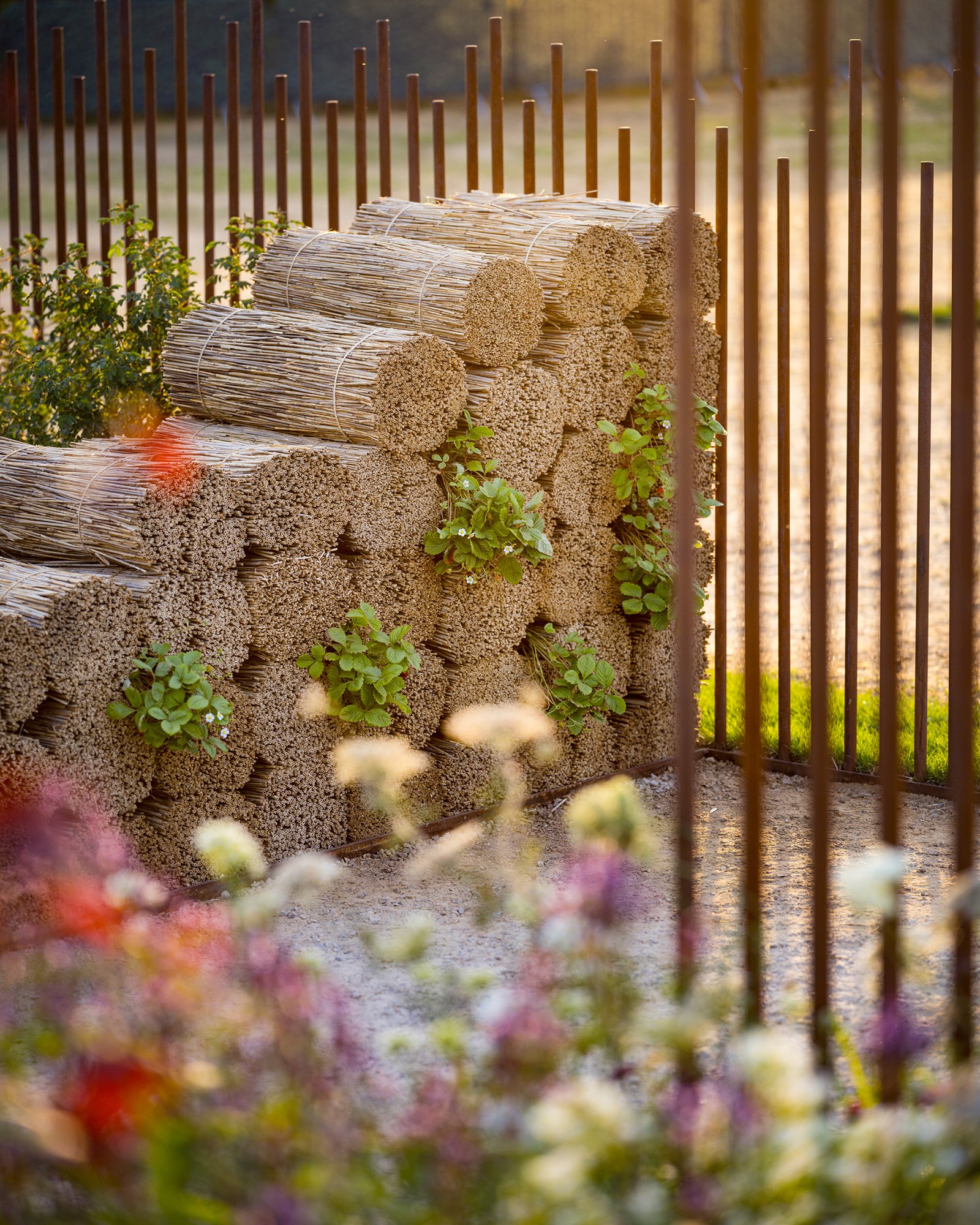
Two large reed bundle piles extended this idea elsewhere in the garden. They provided year-round structure and created habitat for insects, while the gaps between the bundles became planting opportunities. We even grew strawberries within them, bringing an edible element into what might otherwise have been a purely structural feature.
From there, we looked for other ways to reference Norfolk without creating a literal interpretation of the landscape.
Rusted steel rods formed subtle boundaries and screens throughout the garden. Their verticality and varying heights echoed the character of reedbeds, while the rusted finish referenced the agricultural landscape.
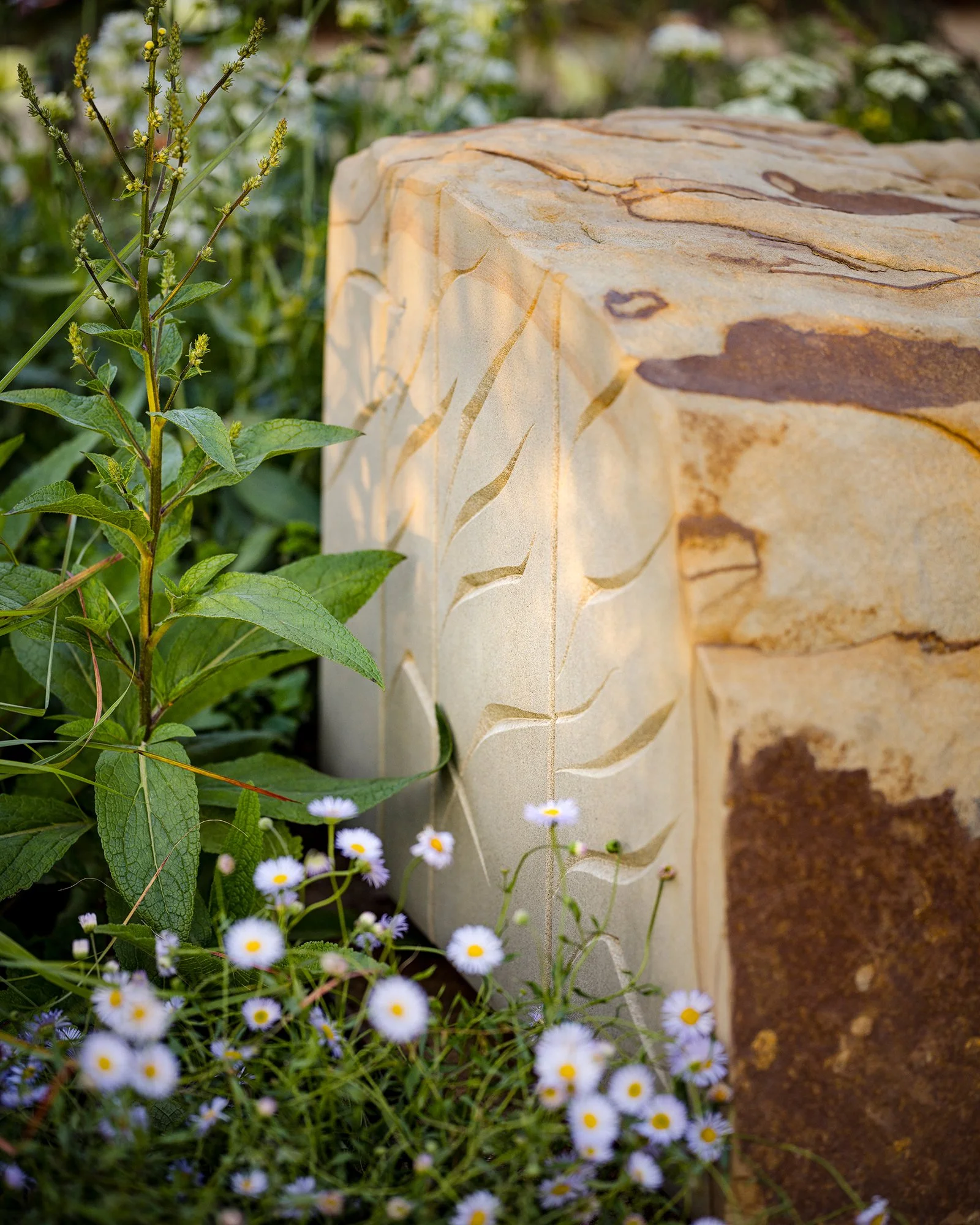
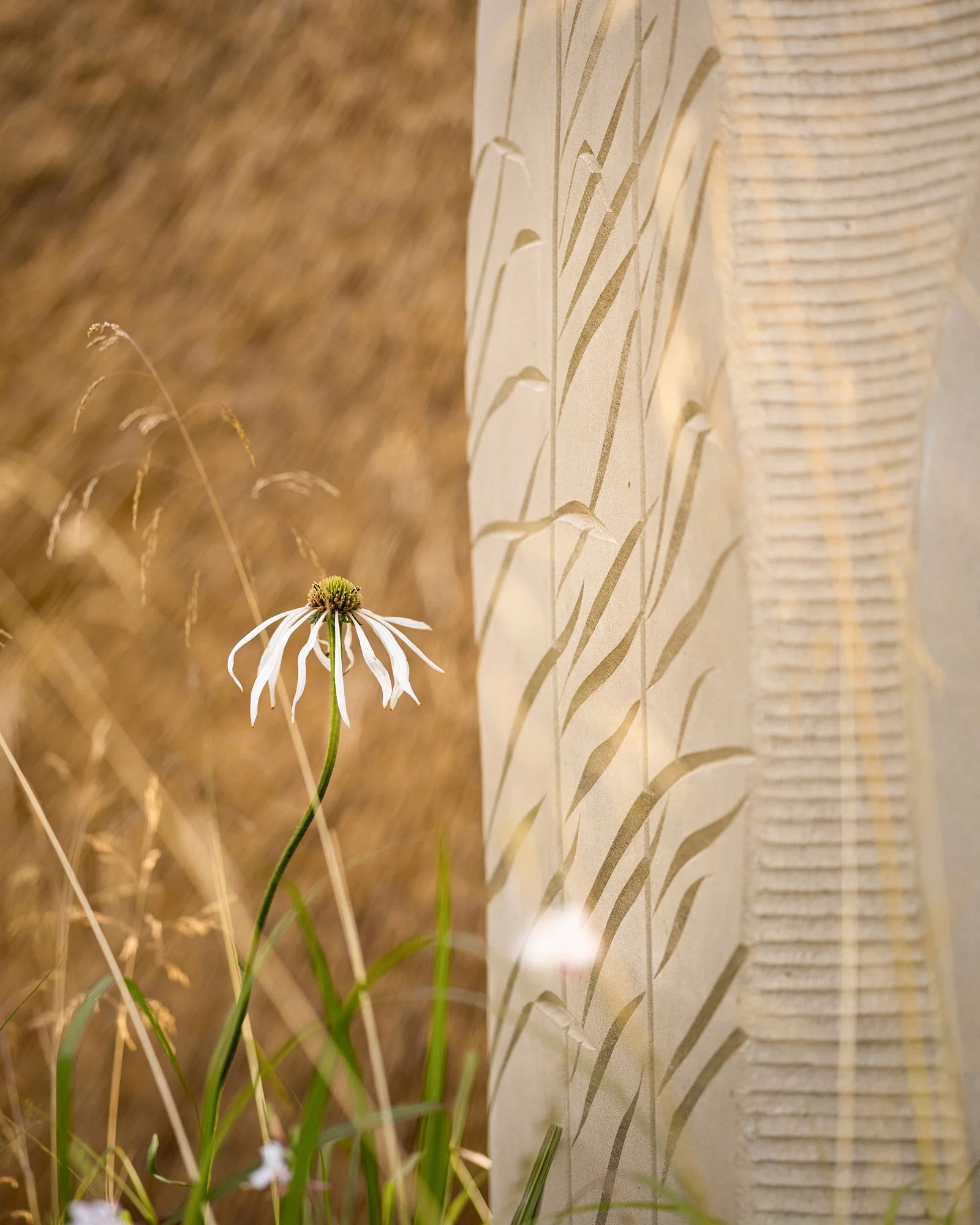
The stone elements were created by local stone carver Teucer Wilson RDI. Two York stone benches and a sculpture brought a different kind of structure to the garden, with the stone hand-carved with reed motifs. This created another connection between the materials within the garden, while the naturally occurring iron in the York stone echoed the rusted steel.
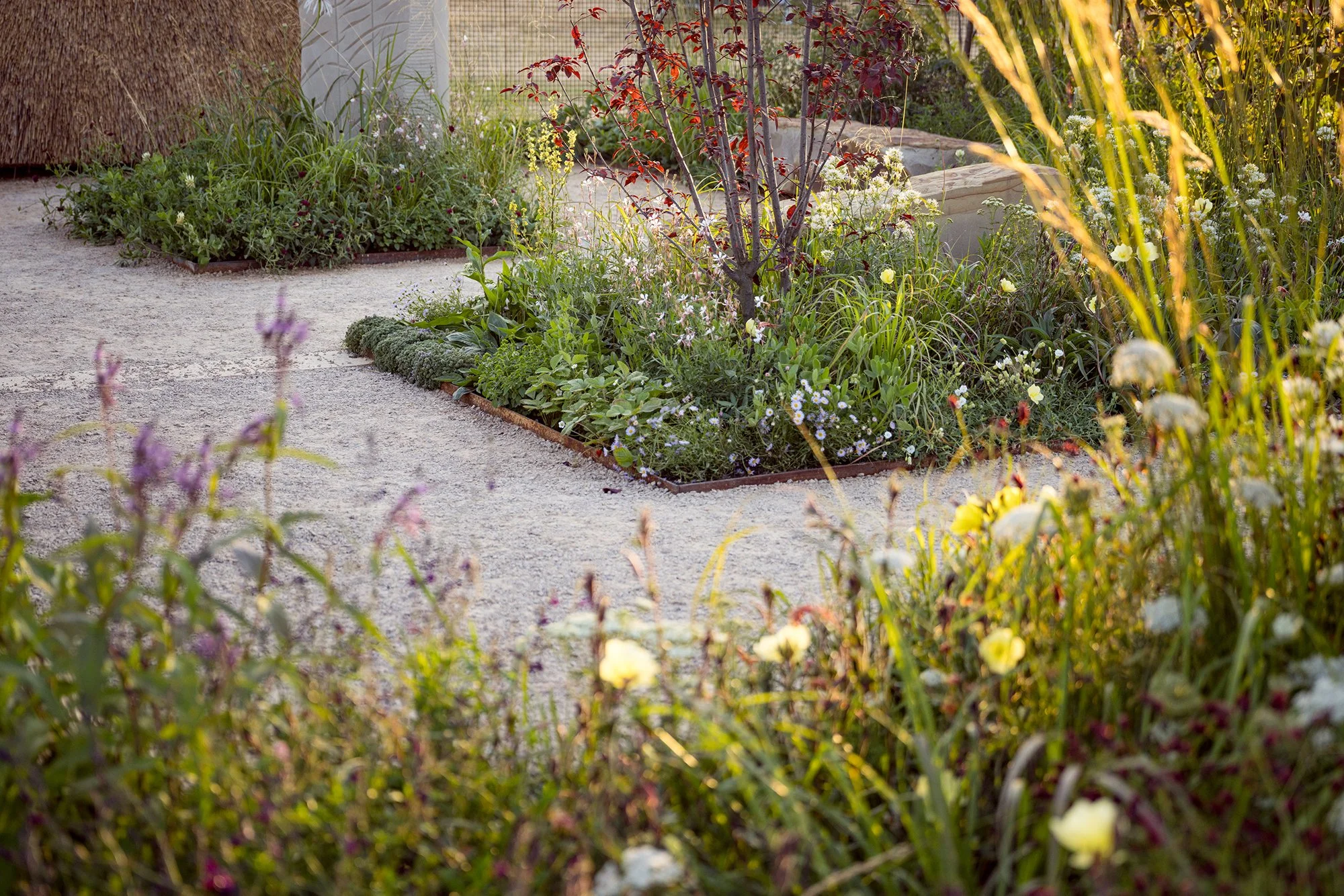
The pathway was laid with Breedon Amber Gravel, the same gravel used on the Sandringham Estate. This was a relatively simple material decision, but one that helped anchor the garden to its setting.
These harder elements were then softened by the planting.
We chose plants with references to the meadows, hedgerows and broadlands of Norfolk, but also considered how each plant would contribute to the garden as a whole. We wanted movement, texture and seasonal change, alongside resilience and value for wildlife.
The planting was deliberately informal. Plants scrambled through the structural elements, connecting the different materials and softening the overall composition.
The plant palette was chosen for its muted colours and soft, gentle naturalistic style, mixing grasses, wildflowers and ornamental plants together. We chose plants that reminded you of the flowers and trees found in the meadows and hedgerows of Norfolk, such as cherry plums and hazels. Wild carrot, valerian and yarrow wove amongst Verbena hastata ‘Pink Spires’, Oenothera lindheimeri and Verbascum chaixii. Several grasses knitted the planting design together, bringing movement and texture. This approach made the garden feel familiar yet contemporary.
For us, the garden was less about recreating a particular Norfolk landscape and more about taking elements that felt familiar to the county and asking how they could be reinterpreted within a contemporary garden.
It was an opportunity to work with local materials, crafts and landscape references in a way that felt considered rather than literal, and to explore how structure and informality can work alongside one another.
We were delighted by the response from visitors throughout the show. It was particularly rewarding to see people engaging with the different materials and details, and to hear what drew them into the garden and what they noticed along the way.
And, to top it all off, we had the opportunity to meet Their Majesties The King and Queen during their visit to the show and talk to them about the garden.
The experience reinforced something we often find in our own garden design work: that the most successful gardens often come from making a series of connected decisions, where materials, structure and planting each have a purpose and contribute to the feeling of the whole.
Laura & Sam x